QA Knowledge
Jira · Notion · AI Agents
What the work was about
QA knowledge was distributed across tickets, documentation, and project-specific notes. Changes needed to be discoverable, reviewable, and processed without mixing separate project contexts.
Situation
Several project areas used similar sources but different structures, rules, and responsibilities.
Objective
Create one workflow that reads sources, collects changes as proposals, and updates knowledge only after human approval.
Outcome
A controlled workflow that turns current sources into reviewable QA knowledge and prioritized test briefs without weakening project boundaries.
An anonymized reconstruction of professional QA engineering work. All names, content, metrics, interfaces, and system details were recreated, summarized, or changed. No client, production, or access data is shown.
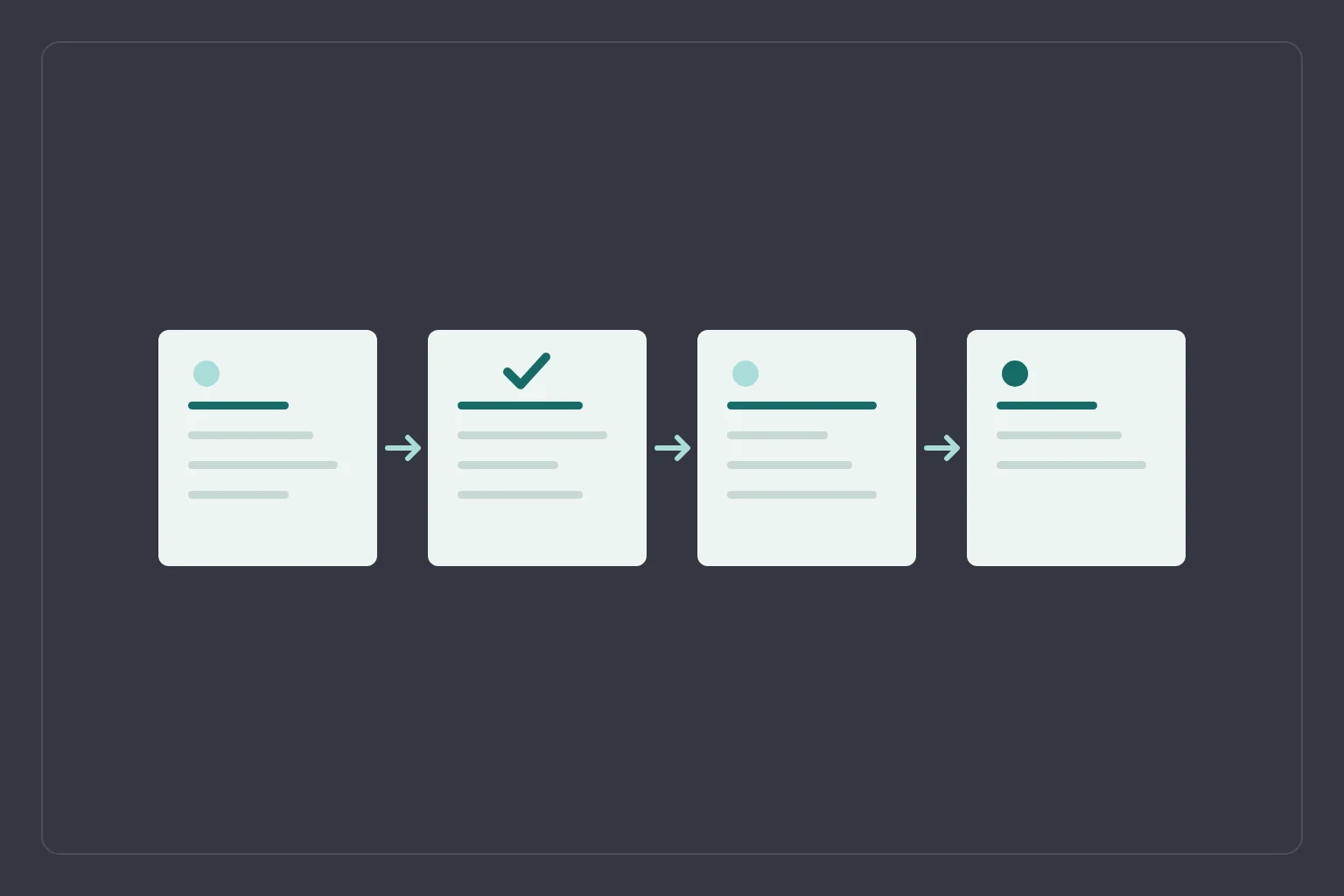
From source system to reviewed test brief
The workflow separates external sources, proposed changes, human approval, and curated QA knowledge.
My contribution
Structured a shared workflow
Built a reusable process for several separated project areas.
Protected project boundaries
Kept configuration, sources, and knowledge isolated by project.
Formalized approval
Defined proposal, review, and adoption as traceable states.
Made QA knowledge actionable
Turned approved knowledge into repeatable test questions and compact test briefs.
What the workflow protects
| Area | Why it matters | Implementation | Evidence |
|---|---|---|---|
| Source access | Capture current knowledge without changing external systems. | Read-only Jira and Notion queries. | Source state and review time |
| Change detection | Separate new information from known knowledge. | Delta checks and normalized proposals. | Proposal with source and destination |
| Review and approval | Prevent automatic changes to curated knowledge. | Human approval step. | Review state and approval information |
| Project isolation | Avoid mixing information from separate projects. | Separate configurations, vaults, and context areas. | Clearly bounded workspaces |
| Provenance and history | Keep the origin of knowledge traceable. | Source references, timestamps, and version history. | Documented change history |
| Test planning | Translate current knowledge into prioritized scope. | Combine initiatives, tickets, regression, and risks. | Compact test brief with source references |
Three representative workflows
All content, states, and sources are synthetic.
| Review a change | |
|---|---|
| Starting point | A source contains new or updated information. |
| Steps |
|
| Expected result |
Evidence: Proposal with delta and review state |
How the workflow becomes visible

Workspace and governance
A recreated overview shows sources, project separation, the review gate, and the curated vault.
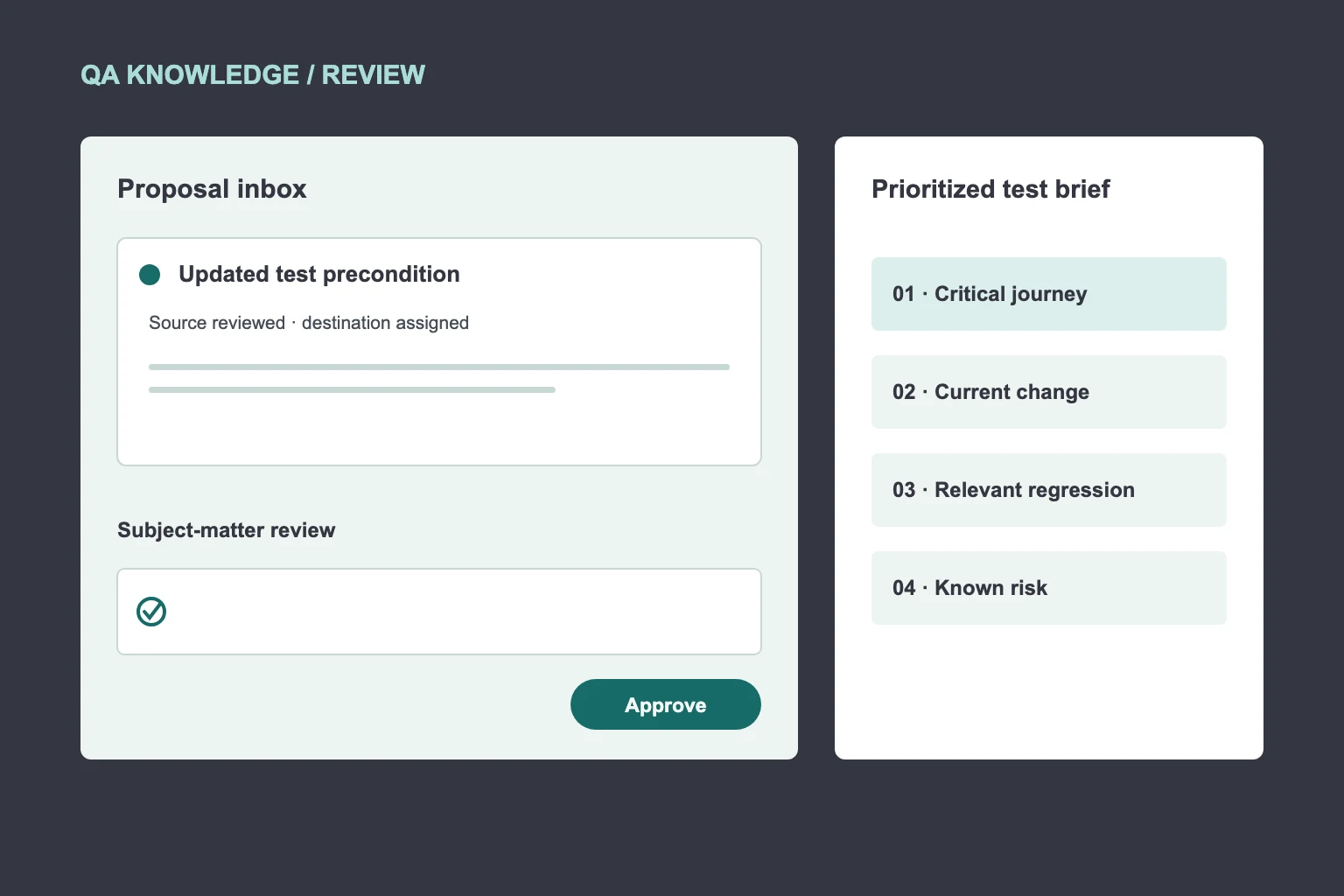
From proposal to test brief
A synthetic review inbox and the resulting QA test brief show the practical workflow.
Decisions that mattered
Read before writing
External sources are reviewed but never changed automatically.
Propose before adopting
AI assistance creates proposals; subject-matter approval remains human.
Isolation before convenience
Shared orchestration must not blur project boundaries.
Résumé and contact
My résumé covers more of my experience. I am also easy to reach with questions.